

Description
For new parents, nothing is more important than the safety of your home environment. While switching to alternative water sources or using older plumbing can save on costs, infants are uniquely sensitive to water chemistry. The Baby-Safe Nursery Check is a specialized diagnostic audit for your water supply (including water used for formula preparation, baby baths, and nursery humidifiers).
The “Infant Integrity” Fingerprint Our killer feature: We don’t just provide technical data; we provide the Infant Integrity Fingerprint. This analysis specifically flags “silent” risks like Nitrates (which can cause Blue Baby Syndrome) and Lead (which impacts neurological development), telling you definitively if the water is safe for your baby’s bottles, baths, and breathable air.
What’s tested
Biological (The “Immune Support” Check)
-
Total Coliform & E. coli: Qualitative analysis (48-hr incubation). Because an infant’s immune system is still developing, detecting any fecal or environmental bacteria is the highest priority.
Physical (The “Air & Skin” Check)
-
pH & ORP: Ensures water isn’t too acidic for sensitive skin during bath time.
-
EC & TDS: Measures total mineral load; high levels can cause “white dust” in ultrasonic humidifiers, which can be irritating to a baby’s lungs.
-
Salinity & Specific Gravity: Checks for salt levels that can dry out delicate skin.
Chemical (The “Purity” Suite)
-
The “Silent Risk” Duo: Nitrate & Nitrite. These are the most critical tests for babies, as they interfere with the blood’s ability to carry oxygen.
-
The Heavy Metal Check: Aluminium, Chromium, Copper, Lead, Manganese, Mercury, and Zinc. We check for metals that can leach from old pipes or enter via groundwater.
-
Developmental Markers: Ammonia, Phosphate, Potassium, Sulfate, and Fluoride.
-
Additives: Free/Total Chlorine, Bromine, Cyanuric Acid, Total Alkalinity, Carbonate Root, and Total Hardness.
Is this the right test for you?
This audit is essential if you:
-
Prepare Formula: You are using your tap or a filtered source to prepare bottles and want to ensure zero Nitrate or Lead exposure.
-
Use Humidifiers: You run a nursery humidifier but are worried about minerals or “system slime” being atomized into the air.
-
Live in an Older Home: You are concerned that your plumbing might be leaching Lead or Copper into the water used for your baby’s bath.
-
Have a Septic Tank or Farm Nearby: You are worried that “invisible” runoff is entering your well or municipal supply.
-
Notice Sensory Issues: The water smells “metallic” or “musty,” or you see a film developing in the baby’s bath or humidifier tank.
.
How it works

How it Works – What’s needed from you?
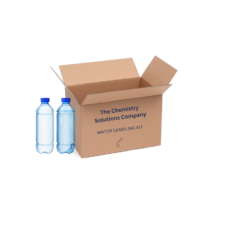
1. Prepare Your Sample Collect 1L of the water sample in a sterile container.
-
The “First Draw” Rule: For the most accurate Lead and Copper results, collect the water first thing in the morning before any other taps have been run.
-
Safety: Do not rinse the bottle and ensure your hands do not touch the inside of the cap.
2. Complete the Sample Information Card Include the following essential data:
-
Contact Info: Full name, phone number, and email.
-
Collection Data: Date and time of collection.
-
System Description: Specify the origin (e.g., “Nursery Bathroom Tap,” “Kitchen Filtration System,” or “Humidifier Feed”).
-
Specific Concerns: Note if you have a newborn, use the water for formula, or have noticed skin rashes after bathing.
3. Shipping & Logistics
-
Courier Service: Notify us once the sample is secured; we will dispatch a courier for collection (unless prepaid).
-
Courier Service: Let us know when you’re ready; we’ll send a courier to collect.
-
The “Cold Chain”: Many chemicals and biological markers are temperature-sensitive. For example, Nitrates and bacteria “die off” or change in high heat. Please use refrigeration items (e.g., frozen gel packs) to maintain a temperature of 2°C to 8°C during transit, ensuring your “Fingerprint” is accurate when it reaches our lab. This ensures an accurate reflection of the conditions inside your home.

Reviews
There are no reviews yet.